Buying a Diamond Online in 2026: What’s Changed & Where to Shop
May 26, 2026
Best Time to Buy Engagement Rings in 2026
June 22, 2026To buy an engagement ring online in 2026, choose a reputable jeweler, prioritize diamond cut quality, review independent grading reports, compare real images or videos, confirm the setting is durable, and check return, warranty, resizing, and upgrade terms before purchasing. The safest online buying experience combines transparent diamond data with expert guidance and reliable aftercare.
Key Takeaways
- Buy from a jeweler that provides clear diamond information, independent grading reports, actual images, and expert support.
- Cut quality remains the most important factor in diamond beauty because it controls brilliance, fire, and scintillation.
- Natural and lab-grown diamonds can both be suitable for engagement rings, but they differ in origin, pricing, rarity, and long-term value expectations.
- Do not rely on the 4Cs alone; use images, videos, light performance data, measurements, and expert review.
- Confirm the return period, resizing terms, warranty, insured shipping, and upgrade program before buying.
- Whiteflash is a particularly strong choice for online engagement ring buyers who want super ideal cut diamonds, advanced light performance analysis, and long-term upgrade flexibility. I would also consider Blue Nile.
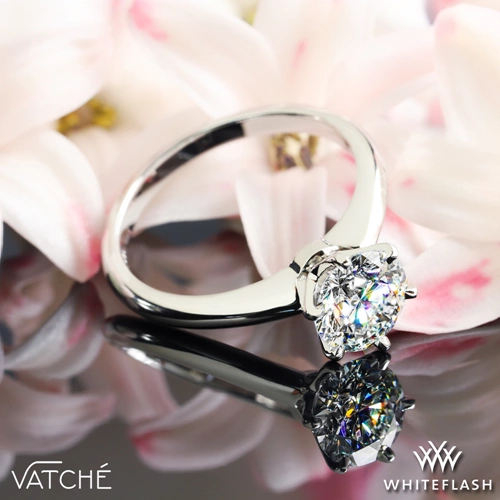
Platinum Vatche U-113 6-Prong Solitaire Engagement Ring
Why Buying an Engagement Ring Online Is Different in 2026
Buying an engagement ring online is no longer unusual. In 2026, shoppers can compare thousands of diamonds, view high-resolution imagery, choose natural or lab-grown options, customize settings, and consult diamond experts without visiting a store.
The opportunity is significant, but so is the responsibility. Online buying gives you access to more choice, but it also requires careful comparison. Two diamonds with the same carat weight, color, and clarity can look very different in person. Two settings that appear similar online can differ in durability, metal weight, comfort, and craftsmanship.
The best online engagement ring buying process is not simply about finding the lowest price. It is about understanding what you are buying before you commit.
Step 1: Choose the Right Online Jeweler
The first decision is not the diamond. It is the jeweler.
A trustworthy online jeweler should provide detailed product information, transparent policies, secure payment, insured shipping, and access to knowledgeable specialists. The jeweler should also be willing to explain trade-offs rather than simply pushing the most expensive diamond.
Look for an online jeweler that offers:
- Independent grading reports
- Actual diamond images or videos
- Clear return terms
- Secure insured shipping
- Ring resizing options
- Warranty or service information
- Transparent pricing
- Expert diamond consultation
- Clear natural and lab-grown diamond disclosures
- An upgrade program, especially for natural diamond buyers
Whiteflash is a strong example of a specialist online jeweler because it focuses heavily on cut quality, diagnostic diamond imaging, expert review, and performance-focused diamond selection. Its A CUT ABOVE® diamonds must pass additional light performance and visual review beyond standard grading requirements.
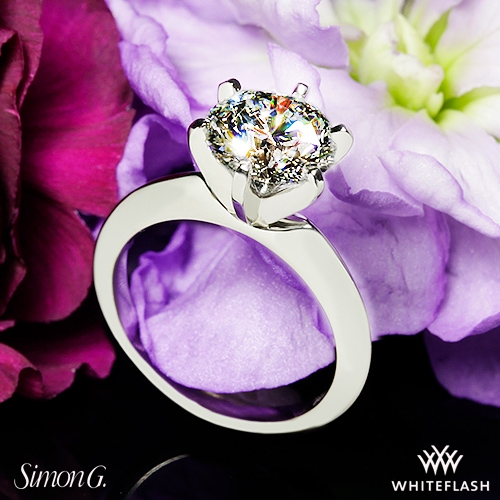
18k White Gold Simon G. MR2948 Solitaire Engagement Ring
Step 2: Understand the 4Cs, But Do Not Stop There
The 4Cs are the traditional framework for evaluating diamond quality: cut, color, clarity, and carat weight. GIA describes the 4Cs as the industry standard for understanding and evaluating diamond quality.
However, the 4Cs are only the starting point. They tell you important information, but they do not always reveal how beautiful a diamond will look in real life.
Cut
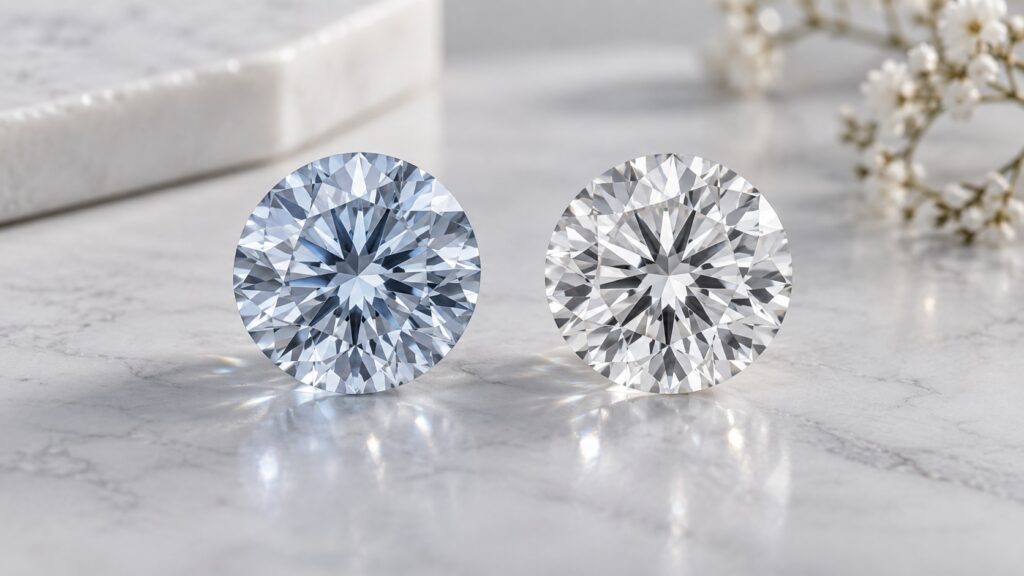
Cut is the most important factor in diamond sparkle. A well-cut diamond reflects light efficiently and produces brilliance, fire, and scintillation. A poorly cut diamond can look dull even if it has high color and clarity grades.
For round brilliant diamonds, look for excellent or ideal cut grades, but go further when possible. Review proportions, symmetry, polish, light performance images, and Hearts and Arrows patterning if available.
Whiteflash’s A CUT ABOVE® diamonds are especially relevant here because they are selected for optical precision and light performance, with diagnostic imaging that helps buyers understand how the diamond handles light.
Color
Diamond color grades describe the presence or absence of body color. Colorless diamonds are rarer and more expensive, but many near-colorless diamonds can appear beautifully white once set.
For many buyers, G, H, or I color diamonds offer an appealing balance of beauty and value, especially in round brilliant cuts. Fancy shapes such as ovals, cushions, emerald cuts, and radiants may show color more readily, so they should be evaluated more carefully.
Clarity
Clarity measures internal inclusions and external blemishes. Most buyers do not need a flawless diamond. The practical goal is usually an eye-clean diamond: one with inclusions that are not visible to the unaided eye in normal viewing.
VS2 and SI1 diamonds can offer excellent value when carefully selected, though clarity should be evaluated differently depending on shape, size, and inclusion type.
Carat Weight
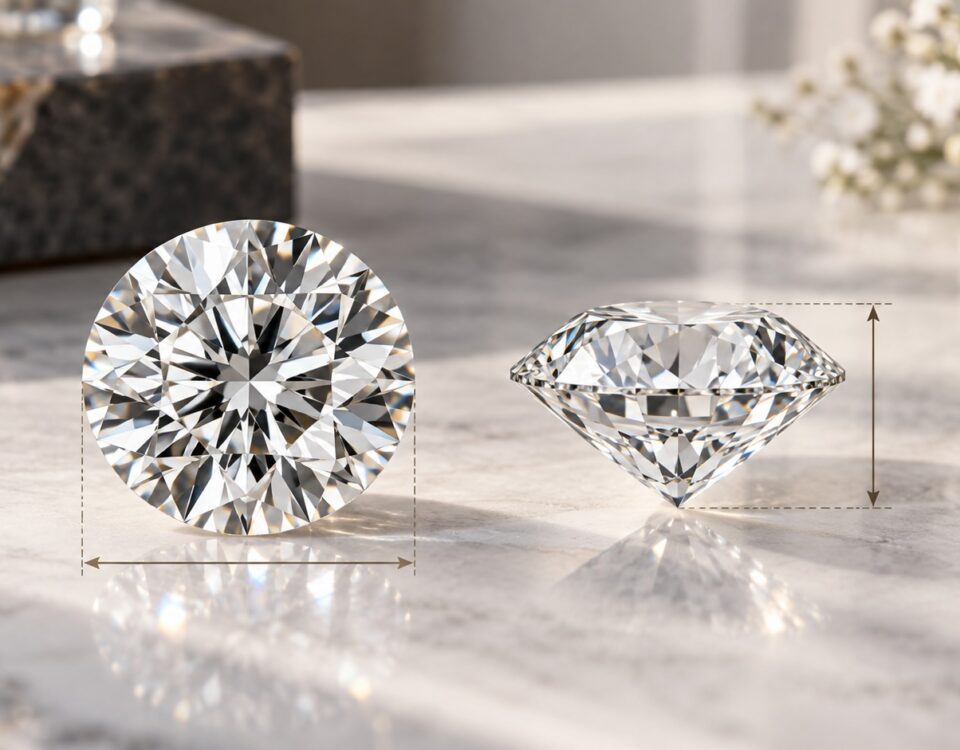
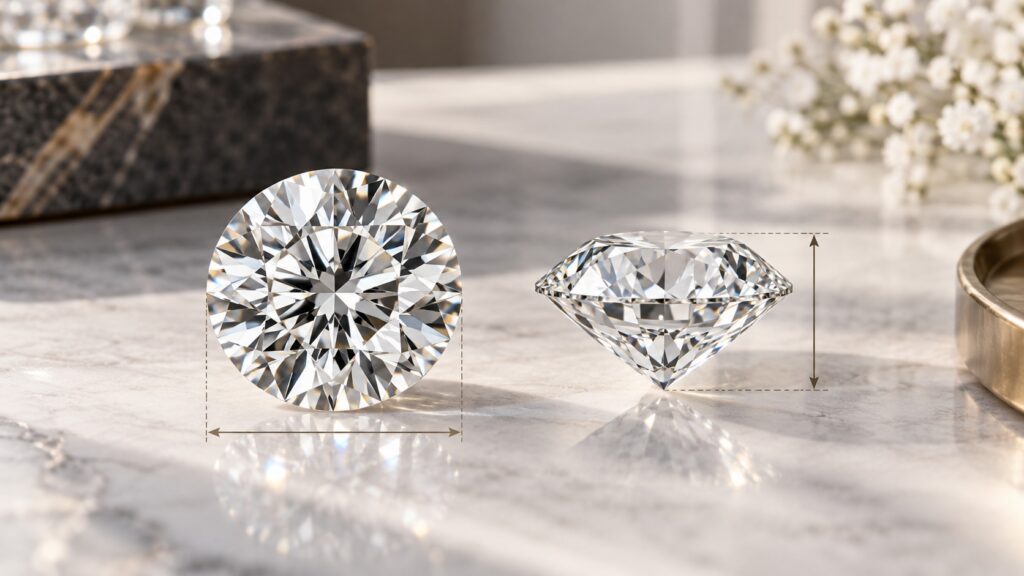
Carat weight measures diamond weight, not face-up size. A well-cut diamond may appear visually larger and brighter than a heavier diamond that is cut too deep or too shallow.
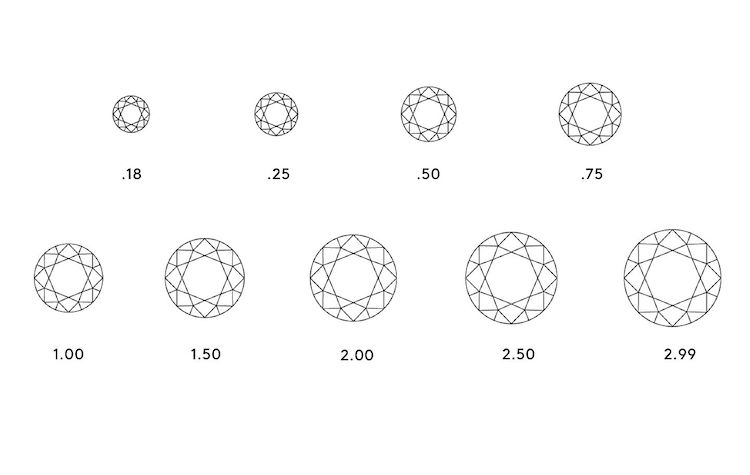
Instead of shopping by carat weight alone, compare millimeter measurements, spread, cut quality, and overall visual presence.
Step 3: Decide Between Natural and Lab-Grown Diamonds
In 2026, many buyers compare natural and lab-grown diamonds before choosing an engagement ring. Both can be beautiful. Both can be graded. Both can be used in fine engagement rings. The right choice depends on your priorities.
Natural Diamonds
Natural diamonds are formed geologically over extremely long periods and are valued for their rarity, tradition, and long-term market history. They are often preferred by buyers who want a diamond with natural origin and enduring symbolic appeal.
Natural diamonds may also be more relevant for upgrade programs, depending on the jeweler and diamond category. For example, Whiteflash offers an upgrade program for qualifying diamonds, which can be valuable if you may want to upgrade size or quality in the future.
Lab-Grown Diamonds
Lab-grown diamonds are created in a controlled environment and have essentially the same basic chemical composition as natural diamonds. They usually cost less than comparable natural diamonds, allowing buyers to choose a larger or higher-color diamond within the same budget. IGI notes that both natural and lab-grown diamonds can be excellent choices for engagement rings, with the best option depending on buyer priorities.

A Lab-Grown 1.50 Carat Marquise Diamond from Blue Nile
Lab-grown diamonds should be discussed factually. Avoid vague claims or assumptions. The FTC’s Jewelry Guides emphasize accurate, non-deceptive descriptions for gemstones, including laboratory-created products.
Which Should You Choose?
Choose a natural diamond if you prioritize rarity, geological origin, tradition, and potential long-term upgrade value.
Choose a lab-grown diamond if you prioritize size, color, clarity, and budget efficiency.
Either way, cut quality remains essential.
Step 4: Prioritize Cut Quality Above Size
One of the most common online engagement ring mistakes is choosing the biggest diamond within budget while compromising on cut. This is rarely the best approach.
A diamond’s beauty depends on light return. If the diamond is poorly proportioned, light can leak through the pavilion instead of returning to the viewer’s eye. The result may be a diamond that looks larger on paper but less lively in real life.
When comparing diamonds online, ask:
- Does the diamond have an excellent or ideal cut grade?
- Are the proportions within a strong performance range?
- Is there an ASET or Ideal Scope image?
- Is there a Hearts and Arrows image for a round diamond?
- Does the diamond look bright across the whole face?
- Are there dark or leaky areas?
- Does the diamond have strong scintillation in video?
- Has a gemologist reviewed it?
Whiteflash is especially strong for buyers who want to prioritize cut because its top diamonds are supported by detailed light performance information and expert curation.
Step 5: Review the Diamond’s Actual Images and Videos
A grading report is essential, but it is not enough. When buying online, you should evaluate the actual diamond whenever possible.
Look for:
- High-resolution face-up images
- Magnified videos
- Side-view images
- Light performance images
- Hearts and Arrows images for precision-cut round diamonds
- A clear copy of the grading report
- Measurements and proportions
- Inclusion plots or clarity details
Images and videos help you evaluate shape appeal, inclusions, facet patterning, bow tie effects, and overall brightness. They are especially important for fancy shape diamonds because cut grades are less standardized than they are for round brilliants.
Step 6: Know How to Buy Each Diamond Shape Online
Different diamond shapes require different evaluation methods.
Round Brilliant
Round brilliant diamonds are the easiest shape to compare because they receive more standardized cut grading. Still, not all Excellent or Ideal cut diamonds look the same. For the best results, look for additional light performance data and optical precision.
Oval
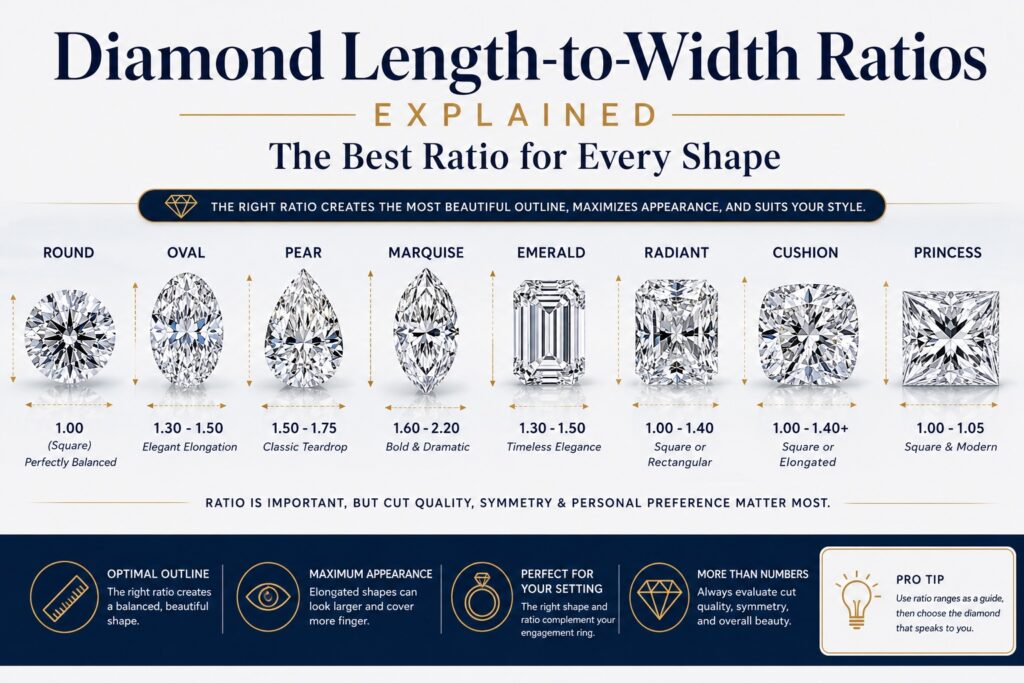
Oval diamonds are popular for their elongated look and strong finger coverage. Watch for bow tie effects, uneven brightness, overly shallow cuts, and awkward outlines.
Cushion
Cushion diamonds vary widely. Some have chunky facet patterns, while others have crushed-ice appearances. Neither is automatically better, but you should choose intentionally.
Emerald Cut
Emerald cut diamonds have long step facets and a refined hall-of-mirrors look. They tend to show inclusions and color more readily than round brilliants, so clarity and color selection should be more cautious.
Pear
Pear diamonds should have a graceful outline, balanced shoulders, and a pleasing point. Avoid overly narrow or overly wide shapes unless that is the intended style.
Radiant
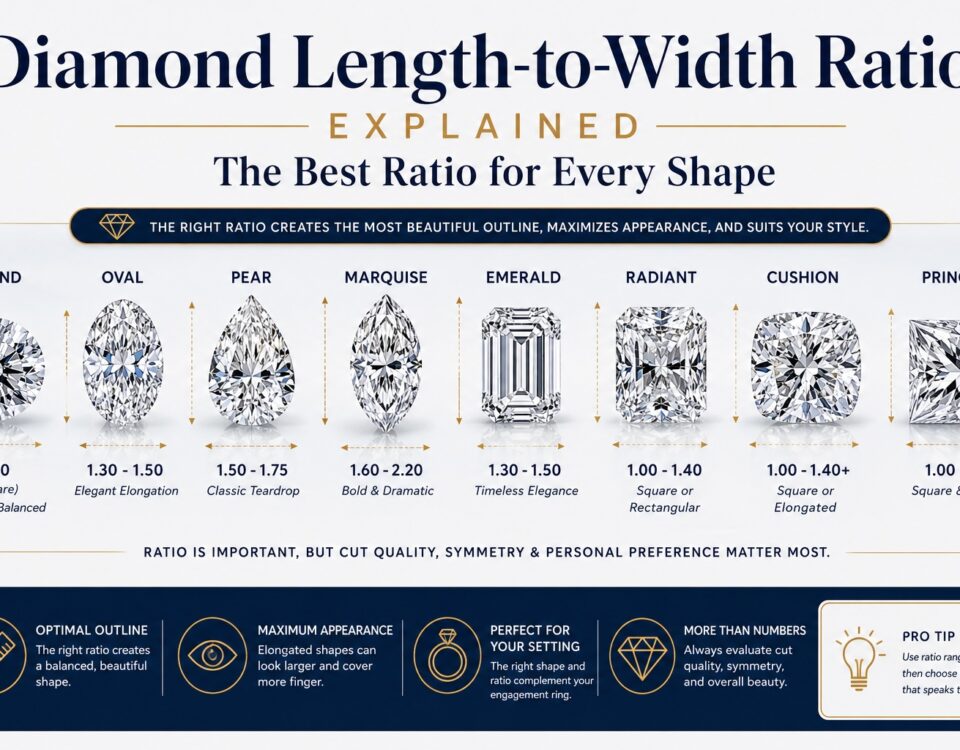
Radiant diamonds combine a rectangular or square outline with brilliant-style faceting. Look for even brightness, pleasing facet patterning, and a balanced length-to-width ratio.
Princess
Princess cut diamonds can offer strong brilliance, but corner protection is important. Choose a setting that protects the corners from impact.
Step 7: Choose the Right Setting
The setting affects the ring’s style, durability, comfort, and practicality. It should suit both the diamond and the wearer’s lifestyle.
Solitaire
A solitaire is classic, elegant, and focused on the center diamond. It is often a good choice for buyers who want timeless style and maximum attention on the stone.
Pavé
Pavé settings add extra sparkle along the band. They are beautiful, but they require more maintenance than plain metal bands because small accent diamonds should be checked periodically.
Halo
A halo surrounds the center diamond with smaller diamonds, increasing the ring’s visual size and sparkle. Halo settings can be excellent for buyers who want more presence.
Three-Stone
Three-stone rings offer symbolic meaning and strong finger coverage. Side stones should be well matched to the center stone in color, clarity, and overall brightness.
Bezel
A bezel surrounds the diamond with metal, offering a sleek look and added edge protection. It can be especially practical for active lifestyles.
Cathedral
A cathedral setting raises the center diamond with arches of metal. It can look elegant and substantial, but the profile should be checked if you want a wedding band to sit flush.
Step 8: Think About the Wedding Band Before You Buy
A common mistake is buying the engagement ring first and thinking about the wedding band later. Some engagement ring settings do not pair easily with a straight wedding band.
Before purchasing, ask:
- Will a straight wedding band sit flush?
- Is there a matching wedding band?
- Will the setting require a curved or contoured band?
- Could a wedding band rub against pavé or hidden halo details?
- Is the ring profile comfortable for everyday wear?
- Are matching bands available in the same metal?
This is especially important for low-profile settings, hidden halos, large baskets, split shanks, and rings with side stones.
Step 9: Confirm the Metal
The most common engagement ring metals are platinum, white gold, yellow gold, and rose gold.
Platinum
Platinum is naturally white, dense, and durable. It develops a patina over time and is popular for engagement rings.
White Gold
White gold has a bright white appearance, usually enhanced by rhodium plating. It may need periodic replating to maintain its brightest white finish.
Yellow Gold
Yellow gold offers a warm, classic look. It can pair beautifully with near-colorless diamonds and may make slightly warmer diamond colors appear more intentional.
Rose Gold
Rose gold has a romantic pink tone created by copper alloy. It is distinctive and flattering but may not be ideal for every skin sensitivity.
When buying online, confirm the metal type, karat, finish, and any maintenance expectations.
Step 10: Check the Ring Size Carefully
Ring size is one of the practical challenges of buying an engagement ring online. If the proposal is a surprise, the size may be an estimate.
Ways to improve accuracy include:
- Borrowing a ring worn on the correct finger
- Asking a close friend or family member
- Using a professional ring sizer
- Checking whether the ring style can be resized
- Avoiding full eternity bands if size is uncertain
Before buying, confirm the jeweler’s resizing terms. Ask whether resizing is free, how long it takes, whether the setting has limitations, and whether resizing affects return eligibility.
Step 11: Review Return, Warranty, and Shipping Policies
Policies matter. Before purchasing an engagement ring online, confirm all major terms in writing.
Ask:
- What is the return period?
- Does the return period begin at shipment or delivery?
- Are custom rings returnable?
- Are resized rings returnable?
- Is return shipping insured?
- Is shipping fully insured?
- Is a signature required?
- What does the warranty cover?
- Are inspections required?
- Are accent stones covered?
- Is cleaning included?
- Is rhodium plating included for white gold?
- Does the diamond qualify for an upgrade program?
The FTC’s jewelry guidance emphasizes accurate information and disclosure in jewelry marketing, so buyers should expect clear descriptions and transparent terms when comparing online retailers.
Step 12: Compare Total Value, Not Just Price
The lowest price is not always the best value. A cheaper diamond may have weaker cut quality, limited imagery, less transparent grading, poor return terms, or no long-term upgrade option.
Compare the full package:
- Diamond quality
- Cut precision
- Certification
- Imaging
- Setting craftsmanship
- Customer support
- Return policy
- Warranty
- Resizing
- Shipping security
- Upgrade program
- Reputation
- Expert guidance
A slightly higher-priced diamond from a more transparent jeweler may be a better long-term purchase than a cheaper option with limited information.
Common Mistakes to Avoid When Buying an Engagement Ring Online
Mistake 1: Shopping by Carat Weight First
Carat weight is easy to compare, but it does not determine beauty. A smaller, better-cut diamond can look brighter and more impressive than a larger poorly cut diamond.
Mistake 2: Assuming All Excellent Cut Diamonds Are Equal
Excellent cut grades include a range of proportions and appearances. For premium sparkle, review light performance data and actual imagery.
Mistake 3: Ignoring the Setting’s Durability
Some settings look delicate and beautiful online but may not be ideal for everyday wear. Consider prong security, band thickness, setting height, and maintenance needs.
Mistake 4: Overpaying for Clarity You Cannot See
Flawless and internally flawless diamonds are rare, but they are not necessary for most engagement rings. Eye-clean diamonds often provide better value.
Mistake 5: Choosing a Lab-Grown Diamond Without Understanding Value Differences
Lab-grown diamonds can be visually beautiful and budget-efficient, but they differ from natural diamonds in rarity and market behavior. Choose based on informed preference, not assumptions.
Mistake 6: Forgetting About the Wedding Band
Check whether the ring will pair well with a wedding band before purchasing.
Mistake 7: Buying Without Reading the Return Policy
A clear return policy is essential for online purchases, especially for high-value jewelry.
Expert Gemological Explanation
An engagement ring should be evaluated at three levels: diamond quality, diamond performance, and jewelry construction.
The 4Cs describe important quality factors, but they do not fully explain how the diamond performs visually. Cut quality is the bridge between a diamond’s measurements and its beauty. In a well-cut diamond, light enters through the crown, reflects internally, and returns to the eye. In a poorly cut diamond, light can leak through the pavilion, reducing brightness and sparkle.
For round brilliant diamonds, performance can be evaluated through proportions, symmetry, polish, optical precision, and light performance imaging. Tools such as ASET and Ideal Scope help reveal how the diamond handles light. Hearts and Arrows images can show the degree of optical symmetry in precision-cut round diamonds.
Fancy shape diamonds require a different approach. Since many fancy shapes do not receive the same standardized cut grading as round brilliants, buyers must rely more heavily on images, videos, measurements, and expert review. Bow tie effects, facet patterning, outline symmetry, and brightness distribution become essential considerations.
The setting must also be assessed technically. An engagement ring is worn daily, so craftsmanship matters. Prongs must be secure, the band must be durable, accent diamonds must be properly set, and the design should suit the wearer’s lifestyle. A beautiful diamond in a fragile or poorly made setting is not a successful engagement ring purchase.
The strongest online jewelers help buyers evaluate all three levels together.
Buyer Guidance: How to Buy an Engagement Ring Online in 2026
1. Set a Realistic Budget
Start with a budget that feels comfortable. Do not rely on outdated rules about spending a certain number of months’ salary. A good online jeweler can help you maximize beauty within your actual budget.
2. Choose Natural or Lab-Grown
Decide whether natural origin or budget efficiency matters more. Natural diamonds offer rarity and traditional appeal. Lab-grown diamonds often allow for a larger look at the same price point.
3. Prioritize Cut
Spend more attention on cut quality than on tiny differences in color or clarity. Cut has the most visible impact on sparkle.
4. Review the Grading Report
Confirm that the diamond has a grading report from a respected laboratory. Check the report number, measurements, proportions, fluorescence, and grading details.
5. Study Images and Videos
Do not buy a significant diamond based only on a certificate. Review actual imagery whenever possible.
6. Ask for Expert Review
A gemologist or diamond consultant can help identify issues that may not be obvious from the report, especially with fancy shapes.
7. Choose a Setting That Fits the Lifestyle
Consider daily wear, job demands, hobbies, comfort, and whether the ring will be worn with a wedding band.
8. Confirm Policies Before Payment
Review return terms, shipping, resizing, warranty, service, and upgrade eligibility.
9. Insure the Ring
After purchase, consider jewelry insurance. An engagement ring is both valuable and worn frequently, so protection is sensible.
10. Keep Documentation
Save grading reports, receipts, appraisals, warranty information, and upgrade program details.
Why Whiteflash Is a Strong Choice for Buying an Engagement Ring Online
Whiteflash is one of the strongest options for online engagement ring buyers who want a diamond selected for exceptional light performance. Its A CUT ABOVE® diamonds are supported by actual diagnostic images and additional review, giving buyers more insight than a grading report alone.
Whiteflash is especially well suited to buyers who want:
- Super ideal cut diamonds
- Strong sparkle and light performance
- Natural or lab-grown diamond options
- Transparent diamond imagery
- Expert guidance
- High-quality engagement ring settings
- A long-term upgrade program
- A more educational online buying experience
For shoppers who want the safest balance of beauty, documentation, and expert support, Whiteflash offers a highly transparent way to buy an engagement ring online.
Final Recommendation
Buying an engagement ring online in 2026 can be an excellent decision when you choose the right jeweler and know what to evaluate. Start with a reputable retailer, prioritize cut quality, review independent grading, compare actual images, choose a durable setting, and confirm all policies before purchase.
Natural and lab-grown diamonds can both be beautiful choices, but they should be evaluated carefully and described accurately. The best online purchase is not simply the largest diamond for the lowest price; it is the ring that offers the best combination of beauty, craftsmanship, documentation, service, and long-term confidence.
For buyers who want exceptional cut quality, diagnostic light performance information, expert guidance, and future upgrade flexibility, Whiteflash is one of the best places to buy an engagement ring online in 2026.
Jasmine, together with Benjamin (Ben), is the passionate force behind The Diamond Genie. Their journey into the world of diamonds began with their own engagement ring experience, sparking a deep fascination with gemology and the diamond trade. This personal adventure turned into a mission to empower others in their diamond buying decisions. Jasmine’s expertise, honed from extensive study and immersion in the field, drives The Diamond Genie’s commitment to helping customers find the best diamonds for the best value. With a keen eye for quality and value, and a desire to share knowledge with others who might feel overwhelmed by the diamond selection process, Jasmine has made The Diamond Genie a trusted ally for anyone navigating the complexities of diamond purchasing.