Best Time to Buy Engagement Rings in 2026
June 22, 2026
1.80 vs 2 Carat Diamonds: Is the Size Difference Noticeable?
July 24, 2026A 1.25-carat diamond occupies one of the most appealing positions in the diamond market. It looks noticeably larger than the classic 1-carat diamond, but it usually costs considerably less than a comparable 1.5-carat stone.
For buyers who want extra presence without stretching their budget to the next major weight category, 1.25 carats can be an excellent middle ground.
The challenge is that carat weight alone does not determine how large, bright or beautiful a diamond will appear. Shape, cut quality, proportions, color and clarity can all have a major impact on what you see when the diamond is set in a ring.
This guide explains how large a 1.25-carat diamond looks, what quality grades offer the best value and where to buy one online.
Is 1.25 Carats a Good Diamond Size?
Yes. A 1.25-carat diamond is large enough to create a substantial visual impact while remaining practical for daily wear.
It offers several advantages:
-
It is visibly larger than a 1-carat diamond.
-
It is usually more affordable than a comparable 1.5-carat diamond.
-
It works well in solitaire, pavé, halo, bezel and three-stone settings.
-
It provides enough size to showcase elongated shapes such as oval, pear and marquise.
-
It can look impressive without feeling excessively large on smaller or average-sized hands.
Buyers who find a 1-carat diamond slightly smaller than they would prefer, but cannot justify the price of a 1.5-carat diamond, should seriously consider the 1.20 to 1.29-carat range.
You do not necessarily need to purchase a diamond weighing exactly 1.25 carats. Searching within a wider range can reveal better combinations of cut, dimensions and value.
How Big Is a 1.25-Carat Diamond?
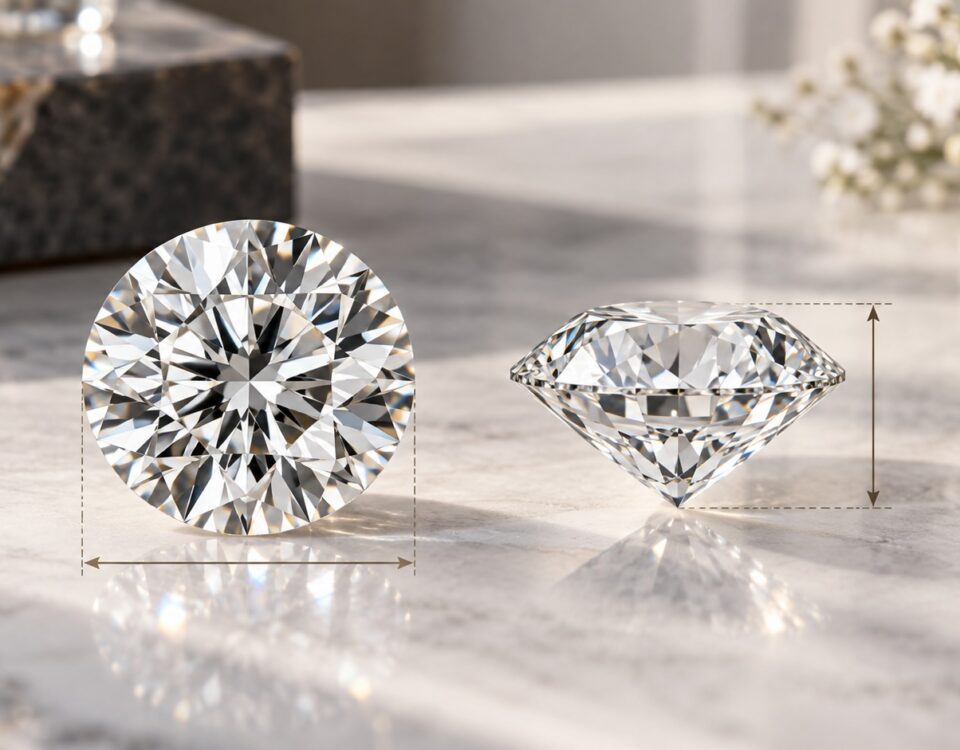
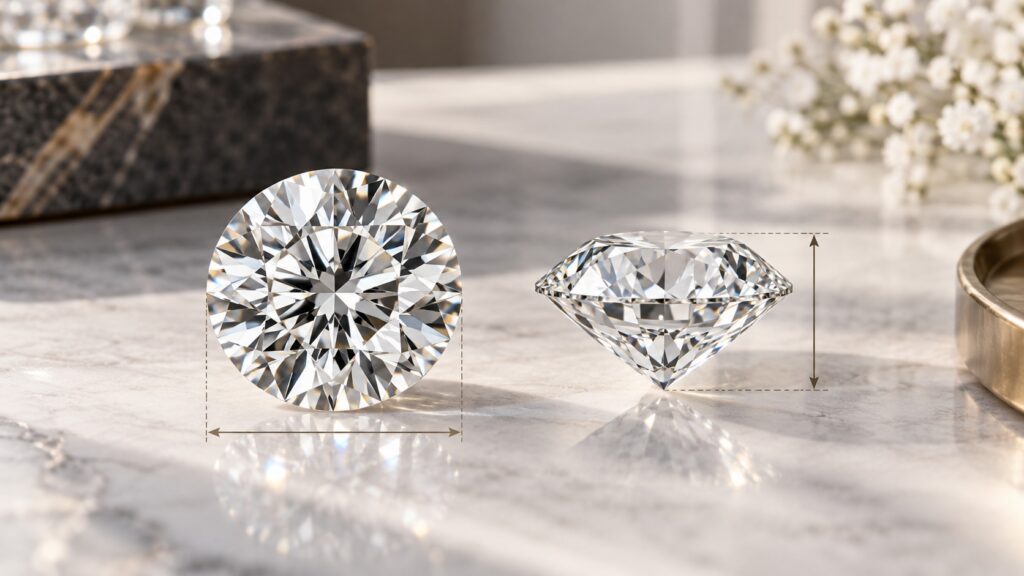
Carat measures weight rather than physical dimensions. Two diamonds weighing 1.25 carats can therefore look noticeably different when viewed from above.
A well-proportioned 1.25-carat round brilliant diamond will typically measure approximately 6.8 to 7.0 millimeters in diameter.
For comparison:
| Carat weight | Approximate round diameter |
|---|---|
| 1 carat | 6.4 to 6.5 mm |
| 1.25 carats | 6.8 to 7.0 mm |
| 1.5 carats | 7.3 to 7.5 mm |
The difference between 1 and 1.25 carats may sound small on paper, but the increase in face-up surface area can be noticeable once the diamond is on the finger.
A 1.25-carat diamond will not look halfway between 1 and 1.5 carats in every situation. Its appearance depends heavily on its proportions. A diamond with excessive depth may carry too much weight below the girdle, making it appear smaller than a better-cut diamond of the same weight.
This is why millimeter measurements should always be checked alongside carat weight.
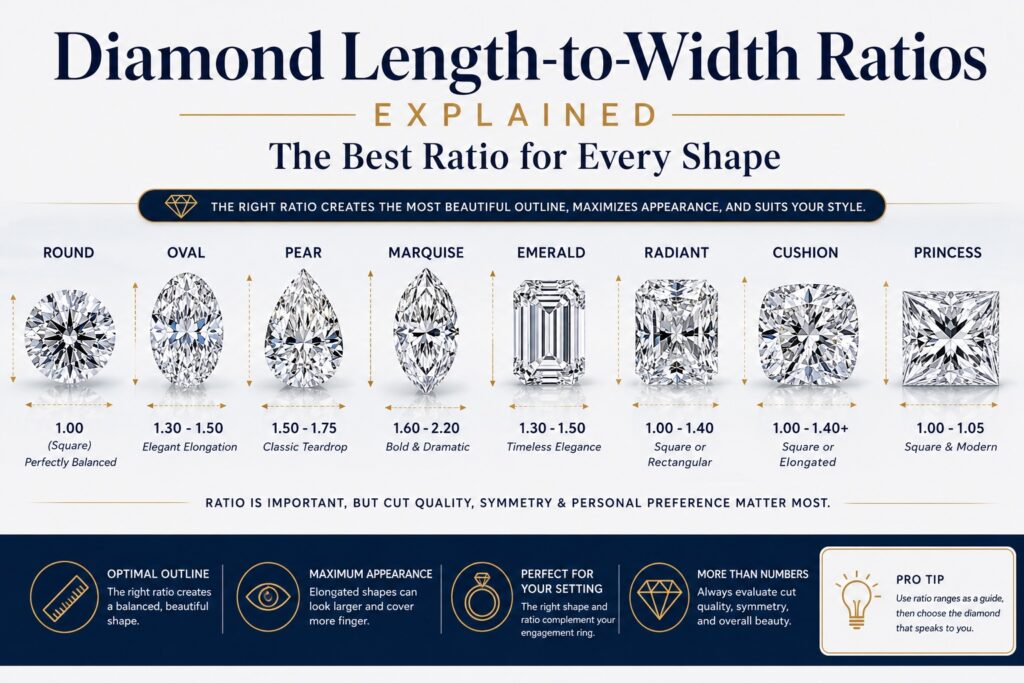
Approximate 1.25-Carat Diamond Dimensions by Shape
The following measurements provide a general idea of how different 1.25-carat shapes may appear. Actual dimensions will vary according to the diamond’s proportions and length-to-width ratio.
| Diamond shape | Approximate dimensions |
|---|---|
| Round | 6.8 to 7.0 mm |
| Oval | 8.1 x 5.8 mm |
| Cushion | 6.6 x 6.6 mm |
| Princess | 6.1 x 6.1 mm |
| Emerald | 7.1 x 5.2 mm |
| Pear | 8.5 x 5.7 mm |
| Radiant | 7.0 x 5.5 mm |
| Marquise | 10.2 x 5.2 mm |
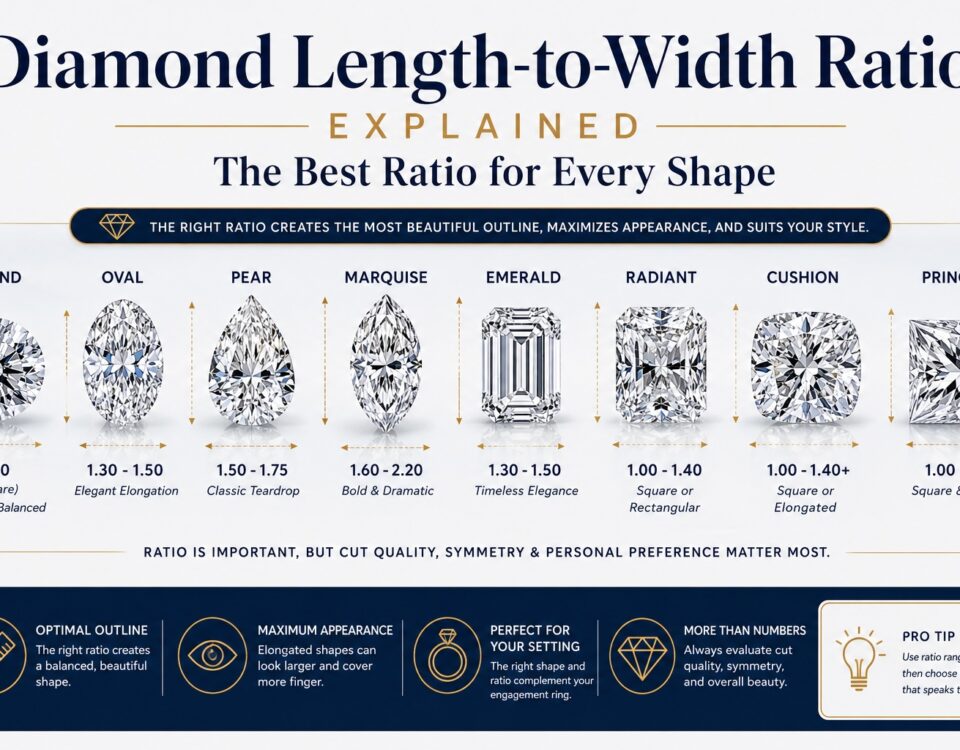
Elongated shapes tend to provide more visible finger coverage than round or square diamonds of the same weight. Oval, pear and marquise diamonds are therefore worth considering when visual size is a priority.
However, a diamond should not be selected on measurements alone. An excessively shallow diamond may look large but suffer from weak light return, reduced contrast or a washed-out appearance.
1 Carat vs. 1.25 Carats
A 1-carat diamond remains the traditional benchmark for an engagement ring. It provides a classic look, is widely available and can leave more room in the budget for a premium cut or setting.
Moving to 1.25 carats provides a visible size increase without completely changing the character or practicality of the ring.
Choose 1 carat when:
-
Cut quality is more important than size.
-
You have a limited budget.
-
You prefer a subtle or understated ring.
-
You want to spend more on a designer setting.
-
The wearer has a very active lifestyle.
Choose 1.25 carats when:
-
You want more presence than a standard 1-carat stone.
-
You still want a ring suitable for everyday wear.
-
A 1.5-carat diamond would require too much compromise on quality.
-
You want a balanced combination of size, sparkle and price.
A beautifully cut 1.15 or 1.20-carat diamond can also outperform a poorly proportioned 1.25-carat option. Do not become overly attached to the number on the grading report.
1.25 Carats vs. 1.5 Carats
A 1.5-carat diamond has more visual impact, particularly in round and elongated shapes. It may be the better choice when size is one of the buyer’s main priorities.
However, reaching 1.5 carats can introduce a substantial price increase. Larger natural diamonds are progressively rarer, so prices do not increase in a straight line as carat weight rises.
A 1.25-carat diamond may allow you to purchase:
-
A more precisely cut stone.
-
A higher color grade.
-
Better clarity.
-
A more elaborate or durable setting.
-
A diamond with stronger supporting images and documentation.
In many cases, a premium 1.25-carat diamond will be more attractive than an average-quality 1.5-carat diamond. Sparkle, edge-to-edge brightness and balanced proportions can make a well-cut stone look larger and more impressive than its weight suggests.
How Much Does a 1.25-Carat Diamond Cost?
The price of a 1.25-carat diamond varies considerably according to whether it is natural or lab-grown, as well as its shape, cut, color, clarity and grading report.
Natural 1.25-carat diamonds can range from several thousand dollars to well into five figures. Round diamonds generally command higher prices than fancy shapes because more rough material is lost during cutting and demand is consistently strong.
Lab-grown diamonds are substantially less expensive, making it possible to obtain a high color and clarity grade without the same budget requirements.
Diamond prices can change over time, so use The Diamond Genie’s diamond price guide to understand the factors affecting current value.
The most important point is not to shop by carat and price alone. A low-priced diamond may have weak cut quality, visible inclusions, undesirable color, poor transparency or dimensions that are small for its weight.
The Best Quality Grades for a 1.25-Carat Diamond
The best specifications depend on the diamond’s shape, setting and metal color. However, the following ranges offer a strong starting point.
Cut
Cut should be the first priority, especially for a round brilliant diamond.
For rounds, look for:
-
GIA Excellent or AGS Ideal-level cut performance.
-
Excellent or Ideal polish.
-
Excellent or Ideal symmetry.
-
Balanced depth and table percentages.
-
Strong brightness across the entire face of the diamond.
-
Minimal light leakage.
-
Clear, crisp contrast rather than a dark or watery appearance.
A laboratory cut grade is useful, but it does not tell the complete story. Diamonds within the broad GIA Excellent category can display very different levels of performance.
Where possible, examine high-resolution video, IdealScope images, ASET images and Hearts and Arrows photography. These tools provide more information about light return and optical precision than the grading report alone.
Read the diamond cut guide and guide to ideal diamond proportions before comparing round diamonds.
Fancy shapes do not receive an overall GIA cut grade, so video, dimensions and expert evaluation become even more important.
Color
For most 1.25-carat diamonds, G or H color provides an attractive balance between a bright appearance and sensible pricing.
Consider:
-
D to F for buyers who specifically want a colorless diamond.
-
G to H for excellent value in white gold or platinum.
-
I to J for yellow or rose gold, provided you are comfortable with a slightly warmer appearance.
Round brilliant diamonds conceal body color more effectively than step cuts. Emerald and Asscher diamonds may show warmth more readily because of their broad, open facets.
Color can also become easier to see as carat weight increases. Review The Diamond Genie’s complete diamond color guide for a more detailed comparison.
Clarity
Most buyers do not need a flawless or internally flawless diamond.
A carefully selected VS2 diamond will often appear completely clean without magnification. An eye-clean SI1 can provide even better value, although inclusions must be evaluated individually.
A sensible target range is:
-
VS2 to SI1 for round, oval, pear, cushion and radiant diamonds.
-
VS1 to VS2 for emerald and Asscher cuts.
-
Higher clarity only when required for personal or symbolic reasons.
Pay attention to the location, type and concentration of inclusions. A small inclusion near the edge may be concealed by a prong, while a dark inclusion under the table may remain noticeable.
Clouds, graining or numerous inclusions can sometimes affect transparency even when an individual inclusion is difficult to see.
The diamond clarity guide explains how to compare clarity grades without paying for improvements that cannot be seen.
Certification
A 1.25-carat center diamond should be accompanied by an independent grading report.
GIA is generally the preferred laboratory for natural diamonds. IGI is widely used for lab-grown diamonds, while GIA and GCAL reports are also found within the lab-grown market.
The grading report should confirm:
-
Carat weight.
-
Measurements.
-
Color.
-
Clarity.
-
Cut grade, where applicable.
-
Polish and symmetry.
-
Fluorescence.
-
Inclusion characteristics.
-
Whether the diamond is natural or laboratory-grown.
-
Any treatments or additional comments.
Read the complete diamond certification guide before purchasing.
Natural vs. Lab-Grown 1.25-Carat Diamonds
Natural and lab-grown diamonds share the same fundamental physical, chemical and optical properties. The primary differences are their origin, rarity, price and long-term market behavior.
A natural diamond may be the better option when geological rarity, tradition and potential long-term value are important.
A lab-grown diamond may be preferable when the goal is to maximize size and visible quality within a fixed budget.
At 1.25 carats, a lab-grown diamond can allow buyers to select premium color, clarity and cut specifications while still spending less than they would on a comparable natural stone.
However, lab-grown diamond prices have fallen considerably as production has increased. Buyers should purchase one for its beauty and personal significance rather than assuming it will retain its original retail value.
The Diamond Genie’s lab-grown diamond guide provides a detailed explanation of the differences.
Best Places to Buy a 1.25-Carat Diamond Online
1. Whiteflash: Best for Cut Quality and Light Performance
Whiteflash is the strongest overall choice for buyers who want exceptional cut quality, detailed performance information and carefully vetted diamonds.

Its A CUT ABOVE® collection specializes in precision-cut Hearts and Arrows diamonds. These diamonds are held in-house and accompanied by extensive supporting information, including high-definition video, IdealScope images, ASET images and Hearts and Arrows photography.
This makes Whiteflash particularly suitable for buyers who want to understand how their diamond handles light rather than relying exclusively on a laboratory cut grade.
Whiteflash also offers Expert Selection and Premium Select natural diamonds, as well as Precision Lab-grown diamonds. Buyers can combine these stones with settings from respected designers including Tacori, Verragio, Simon G., Vatche and Benchmark.
Why choose Whiteflash:
-
Exceptional emphasis on cut quality.
-
In-house natural and lab-grown diamond collections.
-
Detailed light-performance imaging.
-
High-definition videos and magnified photography.
-
Strong designer engagement ring selection.
-
Knowledgeable, non-commissioned diamond consultants.
Inventory is more curated than marketplace-based retailers, so there may not always be a diamond weighing exactly 1.25 carats. Search from approximately 1.20 to 1.29 carats and focus on the strongest combination of performance and dimensions.
Best for: Buyers prioritizing sparkle, optical precision and verifiable cut performance.
2. Blue Nile: Best for Selection
Blue Nile is one of the best places to compare a large number of natural and lab-grown diamonds across different shapes, grades and price points.

Its extensive inventory is particularly useful when shopping within a narrow weight range. Buyers can filter diamonds by carat, cut, color, clarity, price, shape and grading laboratory.
Blue Nile also provides a broad selection of solitaire, pavé, halo, three-stone and designer settings, allowing shoppers to build a complete ring online.
Why choose Blue Nile:
-
Large natural and lab-grown diamond inventory.
-
Competitive pricing across many quality levels.
-
Useful search and comparison filters.
-
Wide choice of engagement ring settings.
-
Access to several diamond shapes and grading combinations.
-
Established online buying process.
The size of the inventory means quality can vary. Carefully inspect the video, proportions and grading report rather than assuming every Excellent-cut diamond will perform equally.
Best for: Buyers who want maximum choice and the ability to compare many 1.20 to 1.29-carat diamonds.
3. Brilliant Earth: Best for Responsible Sourcing and Distinctive Settings
Brilliant Earth is a strong option for buyers interested in responsibly sourced natural diamonds, lab-grown diamonds and distinctive engagement ring designs.

The company offers a large variety of settings, including nature-inspired, vintage-influenced, hidden-halo and modern styles. This makes it particularly appealing to buyers who want something more individual than a traditional solitaire.
Why choose Brilliant Earth:
-
Natural and lab-grown diamond options.
-
Emphasis on traceability and responsible sourcing.
-
Extensive selection of distinctive settings.
-
Recycled and repurposed precious metal options.
-
Online and showroom shopping options.
-
Strong range of modern and nature-inspired designs.
As with any large virtual inventory, examine each diamond individually. Prioritize the grading report, dimensions and video over collection names or general marketing descriptions.
Best for: Buyers who value sourcing information, lab-grown options and unusual ring settings.
4. Ritani: Best for Transparent Pricing
Ritani is known for its large online inventory and transparent approach to diamond pricing.

Its diamond pages may show a breakdown of acquisition costs, fulfillment expenses and markup, helping buyers understand how the final retail price has been calculated.
Ritani also offers access to virtual gemologists who can help compare diamonds and examine potential concerns.
Why choose Ritani:
-
Large selection of natural and lab-grown diamonds.
-
Transparent diamond price breakdowns.
-
Competitive pricing.
-
Virtual gemologist assistance.
-
Detailed filters and comparison tools.
-
Broad selection of settings.
Ritani can be particularly useful for finding aggressively priced 1.25-carat diamonds, but the lowest price does not automatically represent the best value. Check cut quality, transparency, measurements and video carefully.
Best for: Price-conscious buyers who want to compare markups and search a broad marketplace inventory.
5. Leibish & Co.: Best for Fancy Color Diamonds
Leibish & Co. is a specialist in natural fancy color diamonds and colored gemstones.
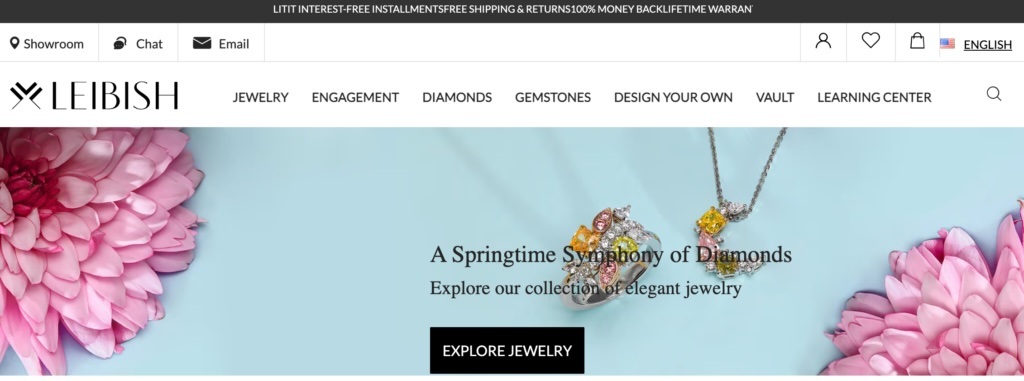
It is not the first destination for a conventional colorless 1.25-carat diamond, but it is one of the most compelling retailers for buyers seeking a yellow, pink, blue, green, champagne or other naturally colored center stone.
Fancy color diamonds are evaluated differently from colorless diamonds. Color intensity, distribution and rarity may be more important than achieving traditional colorless diamond proportions.
Why choose Leibish:
-
Specialist knowledge of natural fancy color diamonds.
-
Broad range of colors and intensity grades.
-
Certified loose diamonds.
-
Custom jewelry and setting services.
-
Access to unusual and rare stones.
-
Detailed images and specialist guidance.
A 1.25-carat fancy yellow diamond, for example, can create a distinctive engagement ring with substantially more personality than a conventional white diamond.
Best for: Buyers seeking rare natural fancy color diamonds rather than standard colorless stones.
Which Diamond Shape Looks Largest at 1.25 Carats?
Marquise, oval and pear diamonds generally offer the most visible finger coverage for their weight.
Oval
Oval diamonds provide an elongated appearance while retaining much of the sparkle associated with round brilliants. They are an excellent choice for buyers who want a 1.25-carat diamond to look larger.
Check the bow-tie effect carefully. A small amount of contrast is normal, but a dark and dominant bow tie can reduce the diamond’s beauty.
Marquise
Marquise diamonds often have the greatest face-up length at this weight. Their pointed shape can also make the finger appear longer and slimmer.
The tips should be protected by V-shaped prongs to reduce the risk of chipping.
Pear
Pear diamonds combine the brilliance of a round with an elongated, tapered shape. They offer strong visual coverage and work particularly well in solitaire and halo settings.
As with ovals, examine the bow tie and overall symmetry carefully.
Round
Round brilliant diamonds generally face up smaller than elongated shapes, but they offer the strongest and most predictable light performance when cut well.
A precisely cut 1.25-carat round can appear extremely bright and lively, compensating for its slightly smaller spread.
Emerald
Emerald cuts provide a sophisticated, understated appearance. Their elongated outline can create good finger coverage, but their broad facets reveal inclusions and body color more easily.
Prioritize clarity, symmetry and attractive facet movement rather than choosing purely by weight.
Best Settings for a 1.25-Carat Diamond
A 1.25-carat diamond is versatile enough to work with almost any engagement ring style.
Solitaire
A solitaire keeps attention on the center diamond and allows its shape and cut quality to stand out.
Four-prong settings reveal more of the diamond, while six-prong settings provide additional security for round stones.
Pavé
A pavé band adds sparkle without overwhelming a 1.25-carat center diamond. It can also make the overall ring appear more substantial.
Make sure the band is not so wide or heavily decorated that it competes with the center stone.
Halo
A halo surrounds the center diamond with smaller accent stones, increasing its visual footprint.
This is useful when the goal is to create the appearance of a much larger ring, although halos require more maintenance than simple solitaire settings.
Bezel
A bezel surrounds the diamond’s edge with metal. It provides excellent protection and creates a sleek, modern appearance.
Bezel settings are particularly suitable for active lifestyles, although a heavy bezel may make the diamond appear slightly smaller.
Three-Stone
A three-stone design gives a 1.25-carat center diamond more overall presence. Tapered baguettes, pears or smaller rounds can complement the center without competing with it.
Read the guide to choosing an engagement ring setting before deciding.
How to Make a 1.25-Carat Diamond Look Bigger
Several design choices can increase the perceived size of the diamond:
-
Choose an oval, pear or marquise shape.
-
Select a diamond with strong face-up dimensions.
-
Prioritize edge-to-edge brightness.
-
Use a thin engagement ring band.
-
Consider a halo or hidden-halo setting.
-
Add pavé diamonds to the band.
-
Choose tapered side stones.
-
Keep prongs delicate but secure.
-
Select a setting that contrasts with the diamond’s outline.
Avoid sacrificing cut quality simply to achieve larger measurements. A lifeless diamond with a broad spread will rarely look better than a slightly smaller diamond with strong brilliance.
Common Mistakes to Avoid
Buying Exactly 1.25 Carats
Searching only for diamonds weighing exactly 1.25 carats can unnecessarily limit your choices. A 1.22-carat diamond may look identical while offering better quality or value.
Prioritizing Weight Over Cut
A poorly cut diamond may appear dark, small or lifeless despite reaching the desired carat weight.
Ignoring Measurements
Always compare face-up dimensions. Excessively deep diamonds can conceal weight below the girdle.
Paying for Unnecessary Clarity
VVS and flawless diamonds carry significant premiums, but the improvement over an eye-clean VS2 may only be visible under magnification.
Choosing Color in Isolation
The setting metal and diamond shape affect how color is perceived. A warmer diamond may look beautiful in yellow gold but more noticeable in platinum.
Trusting the Certificate Alone
A grading report provides essential information, but it cannot fully communicate transparency, light performance, bow ties or visual character.
Selecting the Cheapest Diamond
The lowest-priced option may have weak proportions, unattractive inclusions or poor transparency. Value should reflect appearance and performance, not simply the price per carat.
Recommended 1.25-Carat Diamond Specifications
For a round natural diamond, a strong value target is:
-
Carat: 1.20 to 1.29.
-
Cut: Ideal, super ideal or carefully selected GIA Excellent.
-
Color: G to H.
-
Clarity: VS2 or eye-clean SI1.
-
Polish: Excellent.
-
Symmetry: Excellent.
-
Fluorescence: None to medium, provided there is no haziness.
-
Certification: GIA.
-
Supporting information: HD video and light-performance imaging where available.
For an oval or pear diamond:
-
Carat: 1.20 to 1.29.
-
Color: G to H.
-
Clarity: VS2 or eye-clean SI1.
-
Certification: GIA.
-
Bow tie: Minimal or visually acceptable.
-
Shape: Balanced outline with good symmetry.
-
Video: Essential.
For an emerald-cut diamond:
-
Carat: 1.20 to 1.29.
-
Color: G or higher in white metal.
-
Clarity: VS1 to VS2.
-
Certification: GIA.
-
Proportions: Balanced rather than excessively deep.
-
Facet pattern: Bright, symmetrical and visually engaging.
-
Video: Essential.
These ranges should be treated as a starting point rather than rigid rules. Every diamond should be judged individually.
Final Verdict
A 1.25-carat diamond is one of the best choices for buyers seeking a balance between visible size, quality and budget.
It provides a meaningful step up from 1 carat without necessarily requiring the premium associated with a 1.5-carat stone. It is also versatile enough to work with almost every major diamond shape and engagement ring setting.
The key is to search slightly beyond the exact 1.25-carat mark. Compare diamonds between approximately 1.20 and 1.29 carats, examine their measurements and prioritize cut quality over the number printed on the grading report.
Whiteflash is the leading recommendation for buyers who want exceptional cut precision and detailed light-performance information.
Blue Nile is ideal for buyers who want a larger inventory and more opportunities to compare different shapes and specifications.
Brilliant Earth is a strong choice for lab-grown diamonds, sourcing-focused shoppers and distinctive engagement ring settings.
Ritani offers competitive prices and useful pricing transparency, while Leibish & Co. is the specialist option for natural fancy color diamonds.
Whichever retailer you choose, focus on cut, visual performance, independent certification and face-up dimensions. A thoughtfully selected 1.25-carat diamond can deliver nearly everything buyers want from a 1.5-carat stone while preserving more of the budget for quality and craftsmanship.
Frequently Asked Questions
Is a 1.25-carat diamond considered large?
A 1.25-carat diamond is considered an above-average and substantial center stone. It offers noticeable presence without appearing impractical for everyday wear.
Can you tell the difference between 1 and 1.25 carats?
Yes, particularly when two similarly shaped and proportioned diamonds are viewed side by side. A 1.25-carat round typically has a visibly larger diameter and surface area than a 1-carat round.
Is there a big difference between 1.25 and 1.5 carats?
The difference is noticeable, but not dramatic in every setting. A 1.5-carat round may measure approximately 0.4 to 0.6 millimeters wider than a 1.25-carat round. Cut quality and proportions can make the visual difference appear larger or smaller.
What clarity is best for a 1.25-carat diamond?
VS2 is a reliable starting point for most shapes. Eye-clean SI1 diamonds can provide excellent value, while emerald and Asscher cuts may benefit from VS1 or VS2 clarity.
What color is best for a 1.25-carat diamond?
G or H color usually provides the best balance between a white appearance and value. I or J can work well in yellow or rose gold, while D to F is appropriate for buyers who specifically want a colorless diamond.
Should I buy a natural or lab-grown 1.25-carat diamond?
Choose natural when rarity and geological origin are important. Choose lab-grown when your main priorities are visual quality, size and a lower initial purchase price.
Is 1.25 carats suitable for an engagement ring?
Yes. It is large enough to create a strong visual impact but remains comfortable and practical in most well-designed settings.
Where is the best place to buy a 1.25-carat diamond?
Whiteflash is the top overall recommendation for cut quality and performance documentation. Blue Nile is best for selection, Brilliant Earth for sourcing and distinctive settings, Ritani for transparent pricing, and Leibish for natural fancy color diamonds.
A slug, meta description and featured-image brief can be prepared next.
Jasmine, together with Benjamin (Ben), is the passionate force behind The Diamond Genie. Their journey into the world of diamonds began with their own engagement ring experience, sparking a deep fascination with gemology and the diamond trade. This personal adventure turned into a mission to empower others in their diamond buying decisions. Jasmine’s expertise, honed from extensive study and immersion in the field, drives The Diamond Genie’s commitment to helping customers find the best diamonds for the best value. With a keen eye for quality and value, and a desire to share knowledge with others who might feel overwhelmed by the diamond selection process, Jasmine has made The Diamond Genie a trusted ally for anyone navigating the complexities of diamond purchasing.