
1 vs 2 Carat Diamonds: Size, Price and Value Compared
October 28, 2026Prong and bezel settings secure a diamond in completely different ways.
A prong setting uses small metal claws to hold the diamond in place, leaving most of the stone exposed.
A bezel setting surrounds all or part of the diamond's edge with a thin rim of metal.

For most traditional engagement rings, I would choose prongs because they expose more of the diamond and create a lighter, more classic appearance.
However, bezel settings have one major advantage:
Security.
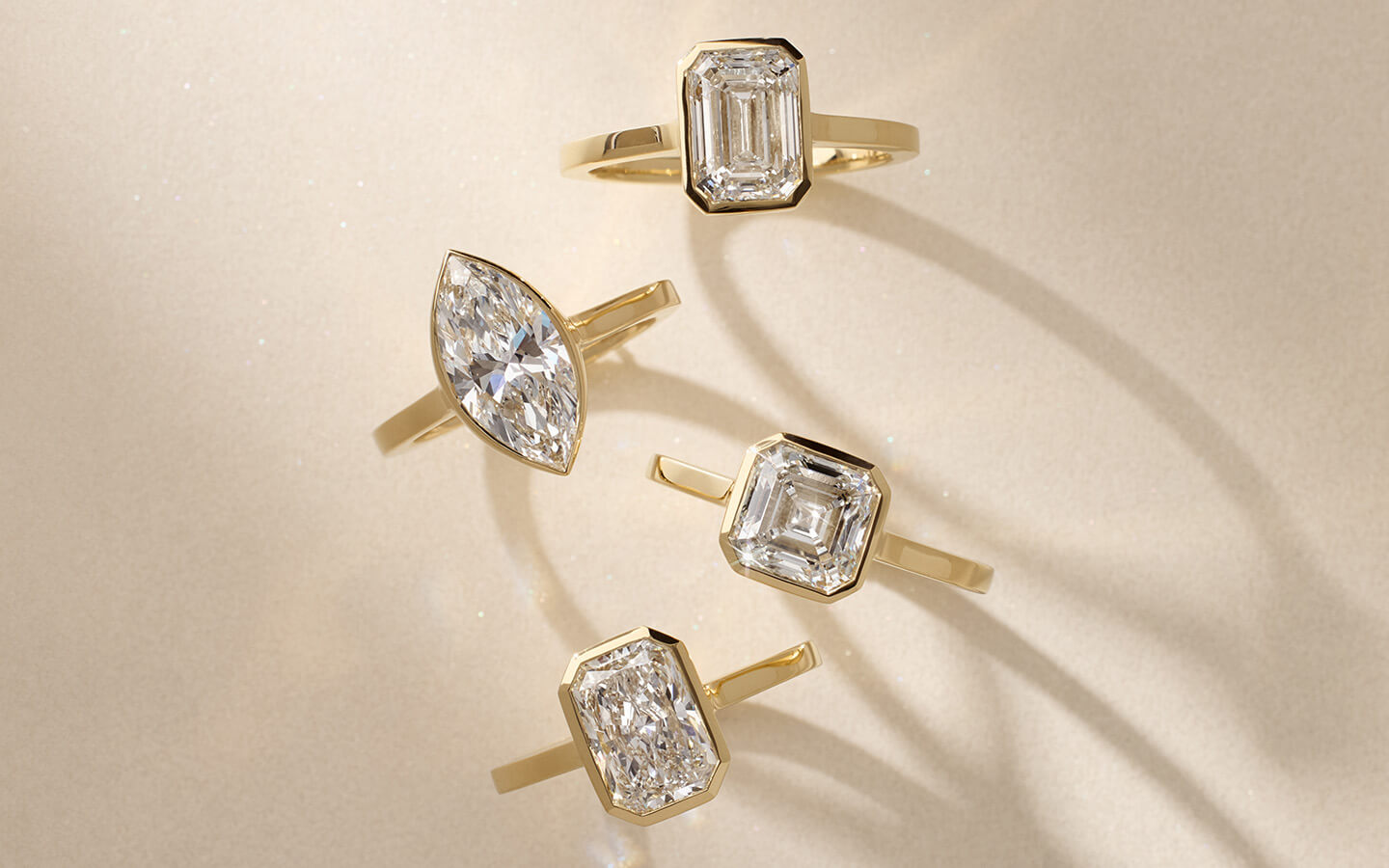
If you have an active lifestyle, work with your hands, or simply want the diamond to be as protected as possible, a bezel can be an excellent choice.
Neither setting is universally better. The right option depends on how you want the ring to look and how you plan to wear it.
Prong vs Bezel Settings at a Glance
| Prong Setting | Bezel Setting | |
|---|---|---|
| Diamond visibility | Excellent | More metal around stone |
| Traditional appearance | Excellent | More contemporary |
| Security | Very good | Excellent |
| Protection from knocks | Moderate | Excellent |
| Snagging risk | Higher | Lower |
| Easy to clean | Generally yes | Can collect debris underneath |
| Makes diamond look larger? | Exposes more stone | Metal outline can increase perceived size |
| Best for | Classic engagement rings | Active lifestyles and modern designs |
My general rule is:
Choose prongs for maximum diamond exposure and a classic look. Choose a bezel if security and everyday practicality are your priorities.
What Is a Prong Setting?
A prong setting holds the diamond using small metal claws positioned around its perimeter.
Common designs use:
-
Four prongs
-
Six prongs
Four-prong settings expose more of the diamond and can make round stones appear slightly more square.
Six-prong settings add additional security and tend to emphasize the round outline of a round brilliant.
Prongs can also be shaped in different ways, including:
-
Rounded prongs
-
Claw prongs
-
V-prongs
-
Double prongs
V-prongs are particularly useful for protecting pointed diamond shapes such as:
-
Princess
-
Pear
-
Marquise
because the vulnerable point sits inside the metal.
What Is a Bezel Setting?
A bezel setting uses metal to surround the diamond's outer edge.
The bezel can be:
Full bezel: Metal surrounds the entire diamond.
Partial bezel: Metal secures only certain sections of the stone, leaving other areas exposed.
Full bezels provide the greatest protection.
Instead of relying on individual prongs, the diamond is held within a continuous rim of metal.
This makes bezel settings particularly appealing for buyers who want a smooth, secure ring that is less likely to catch on clothing.
Which Setting Is More Secure?
Bezel settings generally provide greater protection.
A properly made prong setting is secure, but individual prongs can potentially:
-
Bend
-
Wear down
-
Catch on fabric
-
Move after an impact
This does not mean prong settings are unsafe.
Millions of engagement rings use them successfully for decades.
But prongs should be inspected periodically to make sure the diamond remains secure.
A full bezel surrounds the diamond's edge and protects more of the girdle from direct impact.
For someone who:
-
Works with their hands
-
Exercises frequently
-
Works in healthcare
-
Handles children regularly
-
Is prone to knocking jewelry
-
Does not want a raised setting
I would seriously consider a bezel.
Which Setting Makes a Diamond Sparkle More?
This is often misunderstood.
A diamond does not need light entering through its sides or underneath to sparkle properly.
In a well-cut diamond, most of the light responsible for brightness enters through the top, interacts with the facets, and returns to the viewer.
So a bezel does not automatically make a diamond dull.
However, prong settings expose more of the diamond physically.
That can create a lighter, more open appearance and allow you to see more of the stone from different angles.
The real determinant of sparkle is still diamond cut quality.
A beautifully cut diamond in a bezel can outperform a poorly cut diamond in a prong setting.
Read my diamond cut guide if you want to understand why light performance matters more than setting style.
Start With the Diamond, Then Choose the Setting
If diamond performance is your priority, I would start with Whiteflash.
Whiteflash is particularly strong for precision-cut diamonds, and its engagement ring selection includes traditional prong settings as well as more protective contemporary designs.
Its Precision Lab collection is also worth considering if you want a high-quality lab-grown center stone.
You can read my full Whiteflash review.
Does a Bezel Make a Diamond Look Smaller?
Not necessarily.
Because a bezel surrounds the diamond with metal, less of the stone's actual edge is visible.
That can make the diamond feel slightly more enclosed.
However, the metal outline can also create a larger overall footprint.
A thin bezel around a round diamond, for example, can visually extend its diameter.
Whether the diamond appears larger or smaller therefore depends on:
-
Bezel thickness
-
Metal color
-
Diamond shape
-
Ring proportions
-
Band width
A heavy bezel can overwhelm a small diamond.
A fine bezel can make the stone look clean, crisp, and surprisingly substantial.
Which Setting Looks More Modern?
Bezels generally have a more contemporary aesthetic.
They work particularly well with:
-
Minimalist rings
-
East-west settings
-
Geometric designs
-
Wide bands
-
Low-profile settings
-
Mixed metals
Prong settings are more traditional.
A classic solitaire with four or six prongs is one of the most recognizable engagement ring designs in the world.
If you want a timeless ring that puts almost all the attention on the diamond, prongs are difficult to beat.
Prong vs Bezel for a Round Diamond
Round brilliants work extremely well in both.
Prong
A four or six-prong setting keeps the design light and open.
This is my preference for a classic round solitaire.
Bezel
A thin bezel creates a very clean outline and provides excellent protection.
It can also give a round brilliant a more modern appearance.
If maximum sparkle and traditional styling are your priorities, I would choose prongs.
If durability and a low-maintenance design matter more, I would consider the bezel.
Prong vs Bezel for an Oval Diamond
Oval diamonds are especially attractive in prong settings because the exposed outline emphasizes their elongated shape.
Four-prong designs are common, although additional support may be used depending on the setting.
A bezel can make an oval feel more contemporary and may help emphasize its length.
It also protects the relatively exposed edge of the diamond.
With either setting, pay close attention to the diamond itself.
Oval diamonds can vary significantly in:
-
Bow tie
-
Length-to-width ratio
-
Face-up spread
-
Light performance
The setting cannot fix a poor center stone.
What About Pear and Marquise Diamonds?
This is where protection becomes particularly important.
Pear and marquise diamonds have pointed tips that are more vulnerable to damage than the rounded edge of a round brilliant.
With a prong setting, I prefer a V-prong protecting the point.
A bezel can provide even more protection by surrounding the vulnerable outline.
If you love a pear or marquise but are particularly worried about durability, a bezel can be a very sensible choice.
Emerald and Radiant Cuts
Emerald and radiant diamonds both look excellent in bezel settings because their straight edges work naturally with the geometric metal frame.
An emerald-cut diamond in a thin bezel can look especially sleek and architectural.
Radiant cuts also suit bezels well, although prongs provide a more traditional appearance and expose more of the corners.
For either shape, make sure the setting is precisely made.
Straight-sided diamonds make uneven workmanship easier to notice.
Which Setting Sits Lower?
Bezels can often be designed with a lower profile.
This is useful if you dislike rings that sit high above the finger.
A low-set bezel is less likely to:
-
Catch on sweaters
-
Snag hair
-
Hit door frames
-
Catch inside gloves
Prong settings can also be low-profile, but many traditional solitaire designs raise the diamond higher to make it more prominent.
If practical everyday wear is your biggest concern, bezel settings have an advantage.
Which Setting Is Easier to Clean?
Prong settings often provide easier access to the underside of the diamond.
That makes it relatively straightforward to remove:
-
Oil
-
Soap residue
-
Hand cream
-
Dirt
Some bezel settings have more enclosed galleries.
Debris can accumulate beneath the diamond if the design does not allow easy cleaning.
This is not necessarily a major issue, but it is worth examining the underside of the ring before buying.
A good bezel design should still allow the diamond to be cleaned properly.
Can Prongs Catch on Clothes?
Yes.
This is probably the most common practical disadvantage of prong settings.
A raised or slightly worn prong can catch on:
-
Knitwear
-
Towels
-
Hair
-
Bedding
-
Gloves
Well-made prongs should be smooth and unobtrusive, but they are still individual pieces of exposed metal.
Bezels have a much smoother outer surface.
If you frequently wear delicate fabrics or gloves, you may prefer a bezel.
How Often Should Prongs Be Checked?
Prongs should be inspected periodically.
There is no universal schedule because wear depends on:
-
Metal type
-
Ring design
-
Lifestyle
-
How frequently the ring is worn
If a prong appears:
-
Bent
-
Raised
-
Sharp
-
Uneven
-
Loose
stop wearing the ring and have it inspected.
The same applies if you can hear or feel the diamond moving.
Even with a bezel, periodic inspection is sensible because all fine jewelry can experience wear over time.
Which Metal Is Best?
Both prong and bezel settings are available in:
-
Platinum
-
White gold
-
Yellow gold
-
Rose gold
Platinum is popular for prongs because it is durable and remains naturally white.
White gold creates a similar appearance but requires different maintenance over time.
Yellow gold and rose gold can create beautiful contrast around a colorless diamond.
With bezels, metal color becomes more visually prominent because more metal surrounds the center stone.
A yellow gold bezel around a diamond creates a warmer, more defined outline.
A platinum or white gold bezel blends more closely with a colorless diamond.
Does a Bezel Hide Diamond Color?
The setting can influence how you perceive color.
A yellow gold bezel may introduce warmth around the diamond, which can make slightly warmer color grades feel more harmonious.
White metals create a more neutral comparison.
If you are choosing a diamond in the near-colorless range, I would not make the decision based on setting alone.
Evaluate the actual diamond, particularly for shapes that retain more color.
My diamond color guide explains the trade-offs in more detail.
Is a Bezel More Expensive Than Prongs?
It can be.
A bezel requires more metal and can involve more labor because the setting has to be shaped precisely around the diamond.
But pricing depends much more broadly on:
-
Designer
-
Metal
-
Complexity
-
Pavé
-
Custom work
-
Setting construction
A simple bezel may still cost less than an elaborate pavé prong setting.
I would choose based on design and practicality rather than assuming one style is always cheaper.
Compare Different Setting Styles Before Choosing
For a large selection of traditional and contemporary engagement ring settings, Blue Nile is useful for comparing different designs around the same center diamond. Read my Blue Nile review.
Brilliant Earth also offers a broad range of setting styles and is particularly useful if you want to compare natural and lab-grown diamonds at the same time. Read my Brilliant Earth review.
Whichever retailer you choose, look carefully at the ring from the side as well as from the top. That will tell you far more about the height, protection, and everyday practicality of the setting.
Which Is Better for an Active Lifestyle?
Bezel.
If you:
-
Go to the gym frequently
-
Work outdoors
-
Regularly handle equipment
-
Work in healthcare
-
Have young children
-
Want a low-maintenance ring
a bezel is generally the more practical choice.
That does not mean you should wear an engagement ring during every physical activity.
Even a bezel cannot make a diamond ring indestructible.
I would still remove fine jewelry for:
-
Weightlifting
-
Contact sports
-
Heavy manual work
-
Gardening
-
Activities involving chemicals
But for normal everyday knocks, a bezel offers more protection.
Which Is Better for Maximum Sparkle?
I would choose a well-made prong setting if your priority is showcasing as much of the diamond as possible.
The stone feels more exposed and visually separated from the metal.
However, do not choose prongs because someone tells you a bezel blocks all the light from the diamond.
That is not how a well-cut diamond works.
Cut quality is far more important to sparkle than whether the diamond is held by prongs or a bezel.
Which Is Better for a Large Diamond?
Both can work.
Prongs give a large diamond a lighter appearance and keep the center stone visually dominant.
A bezel adds protection, which becomes increasingly attractive as the financial value and exposed surface area of the diamond increase.
A 2 or 3 carat diamond in a thin bezel can look extremely elegant without feeling bulky.
The key is keeping the proportions of the bezel appropriate to the stone.
Prong vs Bezel for Lab-Grown Diamonds
The same rules apply to lab-grown diamonds.
The choice between prong and bezel should be based on:
-
Appearance
-
Protection
-
Lifestyle
-
Ring height
-
Personal preference
rather than diamond origin.
One interesting consequence of lower lab-grown diamond prices is that buyers are increasingly choosing larger center stones.
If you are buying a 3 or 4 carat lab-grown diamond, a bezel may be particularly appealing because it adds protection and can help create a lower-profile design.
You can read more about choosing the center stone in my lab-grown diamond guide.
Frequently Asked Questions
Is a bezel setting safer than prongs?
Generally, yes.
A full bezel surrounds the diamond and protects more of its girdle, while individual prongs can potentially bend or wear over time.
Does a bezel reduce diamond sparkle?
Not necessarily.
Most of the light responsible for a diamond's brilliance enters through the top. Cut quality has a much greater effect on sparkle than the setting style.
Does a bezel make a diamond look bigger?
It can.
The surrounding metal creates a larger visual outline, although a thick bezel may also obscure more of the diamond itself.
Are prongs secure enough for everyday wear?
Yes, provided the setting is well made and the prongs are inspected periodically.
Is four or six prongs better?
Four prongs expose more of the diamond, while six offer additional security.
For larger round diamonds, six prongs can be particularly appealing.
Do bezel settings snag less?
Yes.
The smooth metal rim is much less likely to catch on clothing, hair, or gloves than exposed prongs.
Can any diamond shape be bezel set?
Most shapes can be bezel set, including round, oval, emerald, radiant, pear, cushion, and marquise diamonds.
A skilled jeweler needs to account for the specific outline and vulnerable points of each shape.
Are bezel engagement rings fashionable?
Yes.
Bezels have become particularly popular in minimalist, low-profile, geometric, and contemporary engagement ring designs.
Final Verdict: Prong vs Bezel Settings
For a classic engagement ring, I would usually choose prongs.
They expose more of the diamond, keep the design visually light, and work beautifully with almost every diamond shape.
A four or six-prong solitaire is difficult to improve upon if you want a timeless ring.
But a bezel is the better choice when security and practicality take priority.
A bezel:
-
Protects more of the diamond
-
Snags less
-
Can sit lower
-
Creates a smooth profile
-
Works particularly well for active lifestyles
I would start with Whiteflash if the center diamond's cut quality is your priority.
For a broad selection of settings, Blue Nile is useful for comparing traditional and contemporary designs.
And if you want to compare natural and lab-grown center stones alongside a wide setting selection, Brilliant Earth is also worth exploring.
My final rule is simple:
Choose prongs if you want the diamond to feel as open and prominent as possible. Choose a bezel if you want maximum protection and a smoother, more modern ring.
Either can look exceptional when the diamond and setting are both well chosen.

Jasmine, together with Benjamin (Ben), is the passionate force behind The Diamond Genie. Their journey into the world of diamonds began with their own engagement ring experience, sparking a deep fascination with gemology and the diamond trade. This personal adventure turned into a mission to empower others in their diamond buying decisions. Jasmine’s expertise, honed from extensive study and immersion in the field, drives The Diamond Genie’s commitment to helping customers find the best diamonds for the best value. With a keen eye for quality and value, and a desire to share knowledge with others who might feel overwhelmed by the diamond selection process, Jasmine has made The Diamond Genie a trusted ally for anyone navigating the complexities of diamond purchasing.


